





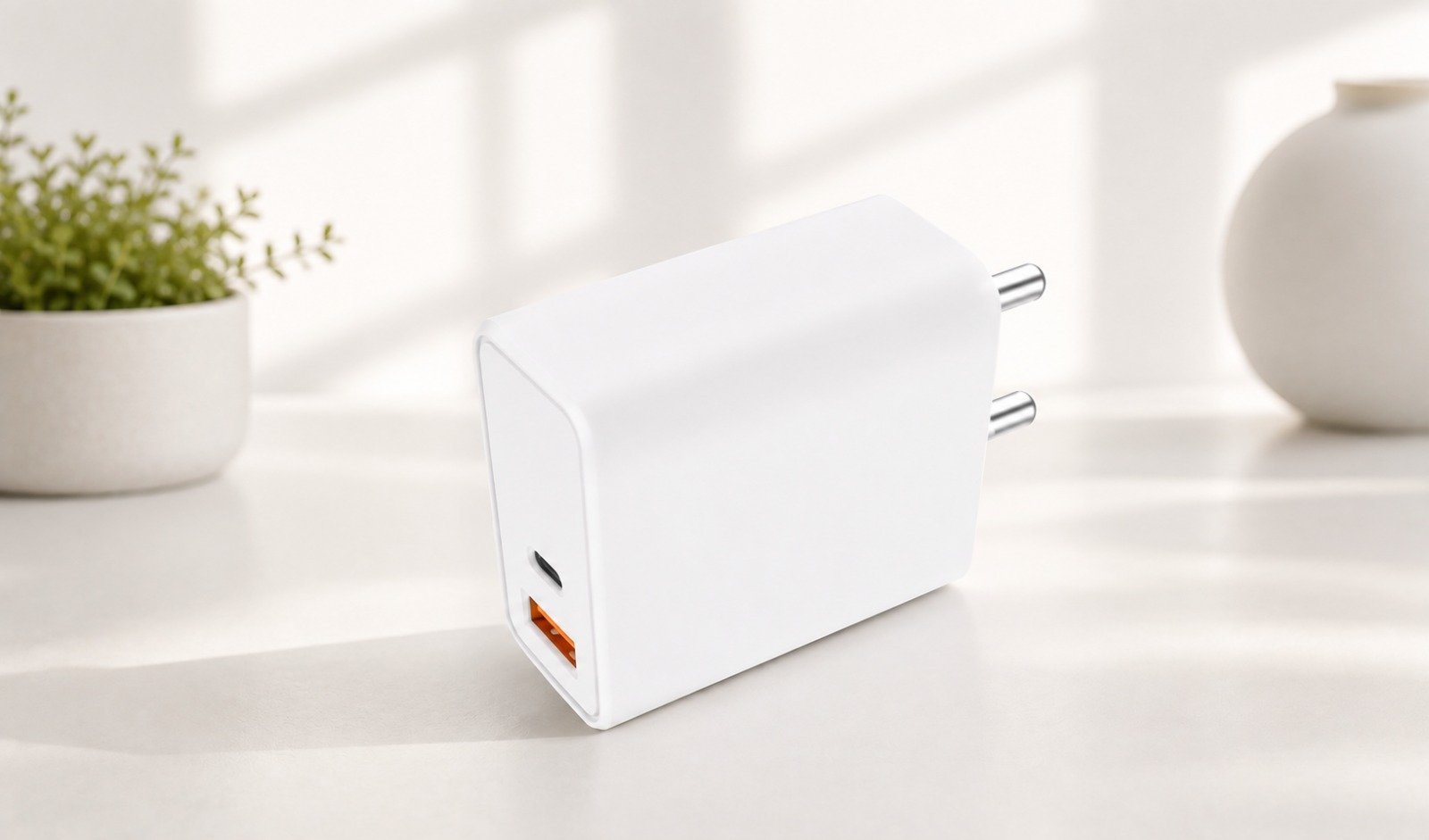
Yes, 30W is considered fast charging for many smartphones, tablets, earbuds, power banks, and other compatible devices. Compared with traditional 5W, 10W, or 12W chargers, a 30W charger can deliver considerably more power and potentially reduce charging time—provided your device and charging protocol support it.
But does a 30W charger always charge at 30W? How fast is 30W charging? Is it safe for your phone? And how does it compare with 20W, 25W, 45W, or 65W charging?
This complete guide explains everything you should know before choosing a 30W fast charger.
What Does 30W Charging Mean?
The “30W” refers to the charger’s maximum power output of 30 watts under supported charging conditions.
Charging power is determined by voltage and current:
Power (Watts) = Voltage (Volts) × Current (Amps)
For example, different voltage and current combinations can produce different power levels.
However, a charger being rated for 30W does not mean your smartphone will continuously receive 30W.
Actual charging speed depends on:
- Your device’s maximum charging input
- Charger output profiles
- Charging protocol
- Charging cable
- Battery percentage
- Battery temperature
- Device power management
The smartphone and charger communicate to determine an appropriate charging level.
Is 30W Considered Fast Charging?
Yes. 30W is fast charging for many modern devices.
Traditional chargers commonly delivered relatively low power, such as 5W or 10W. Moving to 20W, 25W, or 30W can provide a noticeable improvement when the connected device supports higher charging speeds.
For everyday smartphone use, 30W provides a good balance between charging speed and practicality.
It can be suitable for people who want to quickly recharge their phone before:
- Leaving for work
- Going to college
- Travelling
- Gaming
- Attending meetings
- Going out for the day
Instead of waiting several hours with a low-power charger, compatible fast-charging technology can restore useful battery capacity much faster.
How Fast Is a 30W Charger?
There is no universal answer such as “30W charges every phone in 60 minutes.”
Charging time depends heavily on the device.
A phone with a smaller battery and 30W charging support may charge significantly faster than a phone that accepts only 15W.
Battery charging also isn’t perfectly linear.
Phones commonly charge faster when the battery is relatively low and gradually reduce charging power as the battery approaches full capacity.
This process helps manage battery temperature and longevity.
Therefore, when manufacturers advertise figures such as “50% charge in X minutes,” those results apply to specific devices and testing conditions.
Does a 30W Charger Always Deliver 30W?
No.
A 30W charger represents the maximum supported output, not necessarily the power that will continuously enter your device.
For example, if you connect:
30W charger + phone supporting 30W → the phone may reach close to its supported maximum under suitable conditions.
30W charger + phone supporting 20W → the phone should generally draw only the supported charging level.
30W charger + low-power earbuds → the earbuds will request much less power.
Modern compatible charging systems negotiate power between the charger and connected device.
This is why buying a higher-wattage charger doesn’t automatically force the maximum wattage into every device.
What Is Required for 30W Fast Charging?
Simply owning a 30W charger isn’t always enough.
For proper fast charging, the complete charging setup needs to be compatible.
1. A 30W Fast Charger
First, you need a charger capable of providing the required output.
Check the charger’s specifications rather than relying only on marketing labels.
2. A Compatible Smartphone or Device
Your device must support fast charging at or near that power level.
If your smartphone supports only 18W charging, connecting it to a 30W charger doesn’t automatically turn it into a 30W charging phone.
3. Compatible Charging Protocol
Fast charging depends on communication standards or proprietary charging technologies.
One widely used standard is USB Power Delivery (USB PD), particularly across USB Type-C devices.
Other devices may use different fast-charging protocols.
Always check compatibility between your smartphone and charger.
4. Suitable Fast-Charging Cable
Your cable is another important part of the charging system.
A poor-quality or incompatible cable may limit charging performance even when both your phone and charger support fast charging.
Use a reliable cable rated appropriately for the charging setup.
30W Charging vs Normal Charging
The difference becomes clearer when comparing 30W charging with traditional low-power charging.
| Charger Power | General Charging Category |
|---|---|
| 5W | Basic/slow charging |
| 10W–12W | Standard charging |
| 18W–20W | Entry-level fast charging |
| 25W–30W | Fast charging |
| 45W–65W | Higher-power fast charging |
| 100W+ | High-power charging for supported devices |
These categories are general references rather than universal technical standards.
A higher wattage doesn’t automatically mean every connected phone will charge faster.
Device compatibility remains the deciding factor.
20W vs 30W Charging
If you’re choosing between a 20W and 30W charger, the better option depends on your device.
20W Charger
A 20W charger can be sufficient for many smartphones and everyday charging needs.
It offers:
- Compact charging solution
- Faster charging than traditional low-wattage adapters
- Good everyday performance
- Compatibility with many devices
30W Charger
A 30W charger provides additional available power for devices capable of using it.
Potential advantages include:
- Higher maximum output
- Better compatibility with devices supporting around 25W–30W
- More versatility across different gadgets
- Useful headroom for future devices
If your phone can accept close to 30W, choosing a 30W charger generally makes more sense.
25W vs 30W Charging
The numerical difference between 25W and 30W is only 5 watts.
In real-world charging, this doesn’t necessarily mean a dramatic difference.
A well-optimized 25W charging system can sometimes perform similarly to a 30W system depending on the device, charging curve, temperature, and protocol.
Therefore, don’t choose based solely on:
30W > 25W
Instead, check whether your device actually supports the charger’s charging standard and output profile.
30W vs 45W Charging
A 45W charger offers 50% more maximum rated power than a 30W charger, but your device must support that additional power to benefit from it.
If your phone accepts a maximum of 30W:
30W charger → up to the phone’s supported charging rate
45W charger → still limited by the phone’s supported charging rate
The 45W charger may still be useful if you own multiple devices with different charging requirements.
30W vs 65W Charger
A 65W charger is more powerful and can be useful for devices such as compatible:
- Smartphones
- Tablets
- Power banks
- Handheld devices
- Lightweight laptops
However, buying a 65W charger solely for a smartphone that accepts much less power won’t necessarily improve its charging speed.
For users primarily charging smartphones and smaller mobile accessories, 30W can provide a practical balance between size, power, and everyday usability.
Can I Use a 30W Charger With a 20W Phone?
Generally, yes—provided you’re using compatible, properly designed charging equipment.
A phone designed to accept around 20W won’t normally consume the full 30W just because the charger is capable of supplying it.
Think of the charger’s wattage as available capacity, not power that is forcibly pushed into the device.
The phone’s charging circuitry controls how much power it requests and accepts.
Can I Use a 30W Charger for Earbuds?
Yes, in many cases.
Wireless earbuds and their charging cases typically require much less power than smartphones.
When connected to a standards-compliant charger, the device should request only the power it needs.
The same principle applies to many smaller USB-powered accessories.
Always follow the device manufacturer’s charging recommendations.
Is 30W Charging Safe for a Phone?
30W charging can be safe when the phone, charger, cable, and charging protocol are compatible and properly designed.
Modern smartphones include battery-management systems that control charging power based on factors such as:
- Battery level
- Temperature
- Voltage
- Charging state
- Device usage
Charging speed can automatically decrease when necessary.
For better safety, choose quality charging accessories with appropriate protection features.
Important Safety Features in a 30W Charger
When choosing a fast charger, don’t focus only on wattage.
Look for safety protections such as:
Over-Voltage Protection
Helps protect connected devices if voltage exceeds safe operating limits.
Over-Current Protection
Helps prevent excessive current from flowing through the charging system.
Short-Circuit Protection
Designed to respond when an electrical short circuit is detected.
Over-Temperature Protection
Helps manage or stop charging if unsafe temperatures are detected.
Over-Power Protection
Helps prevent the charger from operating beyond its designed power limits.
Good electrical design and reliable components are especially important when using a charger every day.
Does 30W Fast Charging Damage Battery Health?
Fast charging itself does not automatically damage a smartphone battery.
However, heat is an important factor affecting lithium-ion battery ageing.
High charging speeds can generate additional heat under some conditions. Modern smartphones therefore dynamically adjust charging power based on temperature and battery level.
You can also improve battery care by:
- Avoiding charging in extremely hot environments
- Using compatible chargers and cables
- Avoiding low-quality or damaged charging accessories
- Keeping the phone ventilated while charging
- Avoiding intensive gaming while the phone is getting excessively hot
It is normal for charging speed to reduce as the battery approaches full charge.
Why Is My 30W Charger Charging Slowly?
If you have a 30W charger but aren’t getting expected speeds, several factors may be responsible.
Your Phone Doesn’t Support 30W
Check your smartphone’s maximum wired charging specification.
Your Cable Is Limiting Charging
Try a compatible fast-charging cable rated for the required power.
Charging Protocol Isn’t Compatible
A charger and smartphone may both advertise fast charging while supporting different protocols or output profiles.
Battery Is Already Nearly Full
Fast charging is generally strongest at lower battery levels.
As the battery approaches full capacity, charging power typically decreases.
Phone Is Too Hot
Smartphones can reduce charging speed to control battery temperature.
You’re Using the Phone Heavily
Gaming, video recording, navigation, and other demanding activities consume power while charging and may generate additional heat.
Is 30W Good for Gaming Phones?
30W can be useful for gamers because it can provide faster recharging between gaming sessions compared with basic chargers.
However, gaming while charging can increase device temperature because the processor and battery are both working heavily.
For better battery and thermal management, allow the phone to charge without intensive gaming whenever practical.
Is a 30W Charger Good for Daily Use?
For many users, yes.
A 30W charger can provide a useful combination of:
- Fast smartphone charging
- Compact size
- Everyday convenience
- Compatibility with multiple USB devices
- Sufficient power for many mobile accessories
It can be particularly useful if you own several devices with different charging requirements.
Who Should Buy a 30W Fast Charger?
A 30W charger may be a good choice if you:
- Own a smartphone supporting approximately 20W–30W charging
- Want faster charging than basic adapters
- Frequently travel
- Charge several types of mobile devices
- Want one adapter for phones and accessories
- Need a compact everyday charger
For higher-powered tablets or laptops, a 45W, 65W, or higher charger may be more appropriate depending on the device specifications.
How to Choose the Best 30W Fast Charger
Before purchasing a charger, consider these factors.
Check Device Compatibility
Find your smartphone’s supported charging wattage and protocol.
Check Charging Protocols
Look for standards supported by your phone, such as USB Power Delivery where applicable.
Choose the Correct Port
USB Type-C chargers are increasingly common for modern fast-charging applications.
Check whether you need:
USB-A
USB-C
or multiple ports
Check the Cable
Pair the charger with a suitable charging cable.
Look for Safety Protection
A quality charger should include appropriate electrical and thermal protection.
Consider Build Quality
Chargers are often plugged and unplugged multiple times every day, so durable construction is important.
Frequently Asked Questions
Is 30W Fast Charging?
Yes. 30W is considered fast charging for many smartphones and mobile devices, especially compared with traditional 5W or 10W chargers.
How Fast Does a 30W Charger Charge a Phone?
Charging time varies by smartphone, battery capacity, charging protocol, temperature, and battery percentage. A phone must support approximately 30W charging to take full advantage of the charger.
Is 30W Better Than 20W?
A 30W charger provides more maximum available power, but it will only charge faster if the connected device supports a higher charging rate.
Is 30W Enough for a Smartphone?
For many smartphones, yes. 30W offers a strong balance between charging speed and everyday practicality.
Can I Use a 30W Charger for a 25W Phone?
Generally, yes, provided the charger and phone use compatible charging standards. The phone should regulate how much power it accepts.
Can a 30W Charger Damage a 20W Phone?
A properly designed and compatible charger should not force 30W into a device that only requests a lower amount of power. Always use quality chargers and cables that comply with appropriate standards.
Is 30W Good for Fast Charging?
Yes. For smartphones supporting approximately 25W–30W input, a 30W charger can provide effective fast charging.
Is 30W Faster Than 25W?
30W provides a higher maximum power rating, but the real-world charging-time difference may be relatively small depending on the phone’s charging curve and protocol.
Is 30W Enough for a Laptop?
It depends on the laptop. Some lightweight USB-C laptops may operate or charge at around 30W, while many laptops require 45W, 65W, or substantially more. Always check the laptop manufacturer’s recommended power input.
Final Thoughts
So, is 30W fast charging? Yes.
For many modern smartphones and mobile accessories, 30W provides a strong balance of speed, convenience, and versatility. It is considerably more capable than traditional low-power charging and can be an excellent everyday choice when paired with a compatible device and cable.
However, remember that wattage alone doesn’t determine charging speed.
Your smartphone’s supported charging rate, charging protocol, cable, battery level, and temperature all affect real-world performance.
Before buying a 30W charger, check your device specifications and choose a quality charging solution with proper safety protections and protocol compatibility.