






Car charger – Smartphones have become essential travel companions. We use them in the car for navigation, calls, music, ride-booking apps, payments, and staying connected. All of these activities can consume battery power quickly, especially during long journeys.
A reliable car charger allows you to charge compatible smartphones and other USB-powered devices while travelling. However, not every car charger provides the same charging speed, number of ports, compatibility, or power output.
Modern car chargers are available with USB-A, USB-C, Power Delivery (PD), Quick Charge (QC), dual-port charging, and different power ratings such as 20W, 38W, 45W, 65W, and higher.
So, which car charger should you choose?
In this complete car charger buying guide, we explain the important factors you should consider before buying a car charger, including wattage, USB ports, fast-charging technologies, device compatibility, safety, and build quality.
What Is a Car Charger?
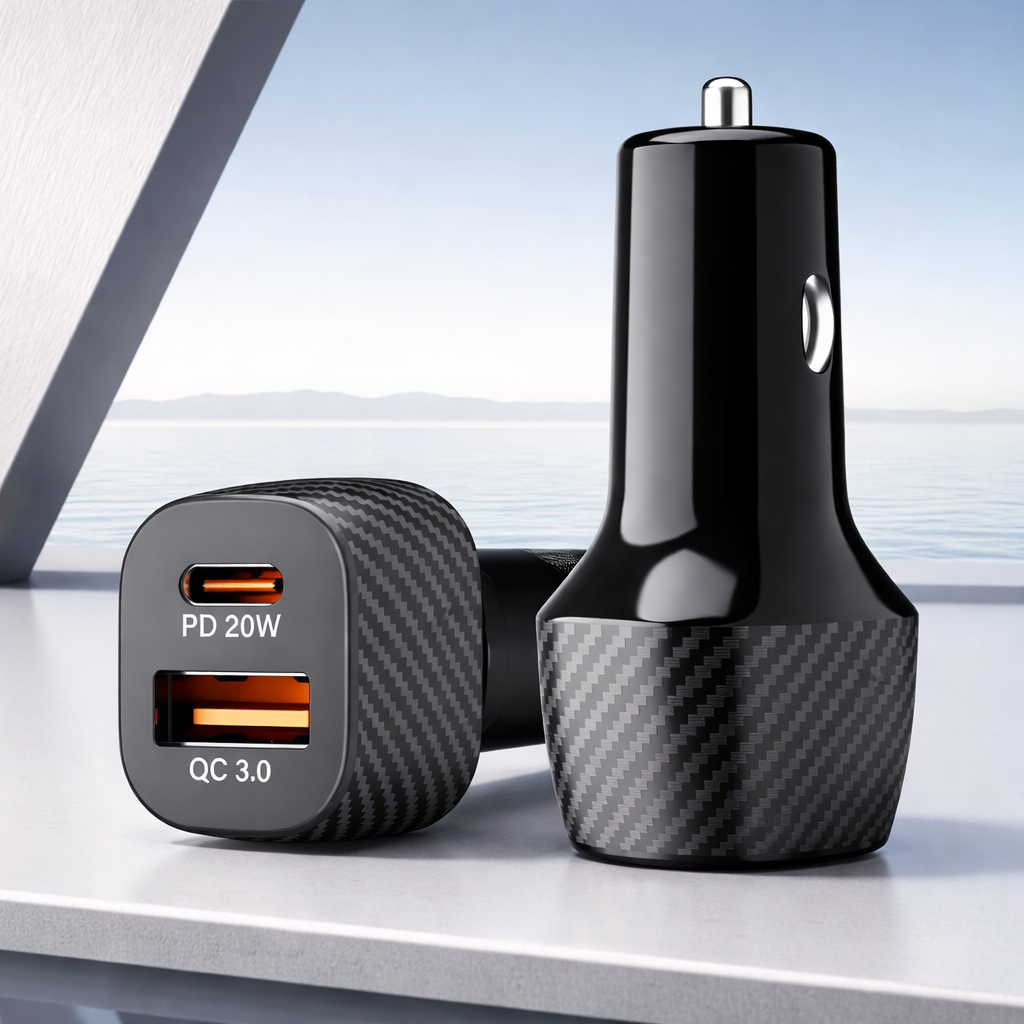
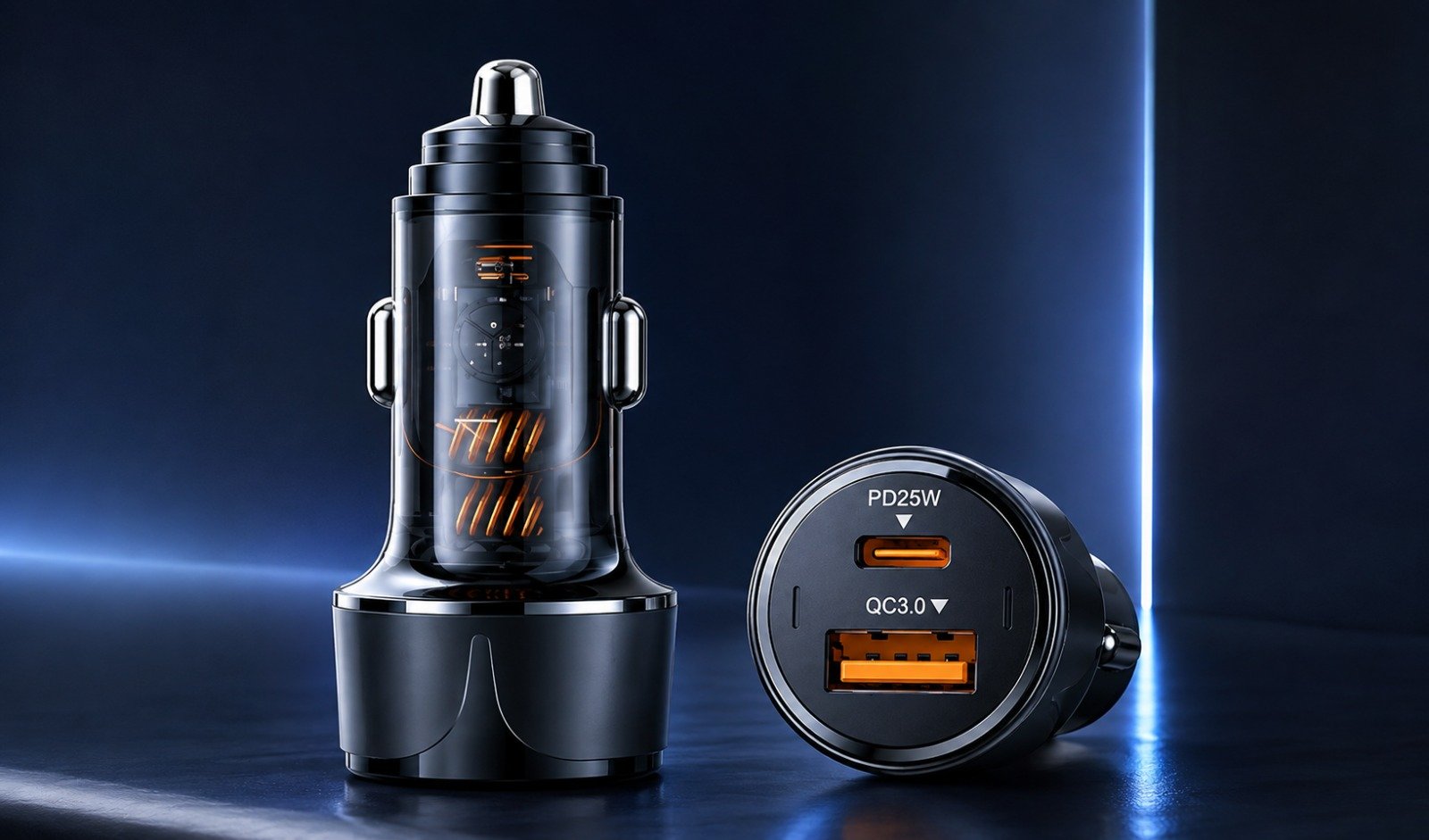
A car charger is a compact charging accessory designed to connect to a compatible power socket in a vehicle and provide USB charging ports for electronic devices.
Depending on the model, a car charger may include:
- USB-A port
- USB-C port
- Multiple USB ports
- USB Power Delivery support
- Quick Charge support
- Fast-charging capabilities
Car chargers can be used with compatible smartphones, tablets, power banks, wireless earbuds, and other USB-powered accessories.
Why Do You Need a Car Charger?
Using navigation, mobile data, Bluetooth, music streaming, and other applications for extended periods can significantly increase smartphone battery consumption.
A car charger provides convenient access to power while travelling.
It can be especially useful for:
- Daily commuting
- Long road trips
- Business travel
- Navigation
- Cab and taxi drivers
- Delivery professionals
- Families travelling with multiple devices
- Users who spend significant time in their vehicles
A fast-charging car charger can be particularly useful when you have limited time in the vehicle and need to recharge a compatible device quickly.
How to Choose the Right Car Charger
Choosing the best car charger requires more than selecting the highest wattage printed on the product.
You should consider your phone, charging cable, number of devices, charging technology, and the charger’s specifications.
Here are the most important factors.
1. Check Your Phone’s Charging Requirements
Before buying a car charger, check the maximum charging power and charging standard supported by your smartphone.
Different devices may support different charging technologies and power levels.
For example, one smartphone may support 20W charging while another supports 25W, 45W, 65W, or a manufacturer-specific fast-charging technology.
Using a higher-wattage charger does not automatically force more power into your phone. With properly designed compatible charging systems, the charger and device negotiate an appropriate power level.
Therefore, select a charger that supports the charging requirements of your device.
2. Understand Car Charger Wattage
Wattage indicates the amount of electrical power a charger is designed to deliver under supported conditions.
Modern car chargers come in several power categories.
20W–30W Car Chargers
These can be suitable for many smartphones and smaller USB-powered devices.
They are useful for everyday users who primarily need to charge one phone.
38W Car Charger
A 38W car charger can offer additional charging capability, especially in models with two charging ports.
Depending on how the total power is distributed between the ports, it may allow you to charge two compatible devices simultaneously.
45W Car Charger
A 45W car charger can be a useful choice for compatible fast-charging smartphones, tablets, and other USB devices.
When combined with the correct cable and charging protocol, it can provide faster charging for supported devices.
65W Car Charger
A 65W car charger provides higher power capacity and can be suitable for users with more demanding USB-C devices.
Depending on the charger design and individual port specifications, it may support compatible smartphones, tablets, power banks, and certain USB-C laptops.
Always check the output specification of each port rather than relying only on the total wattage shown on the charger.
3. Check Individual Port Output
This is one of the most important points when buying a multi-port car charger.
A charger advertised as “65W” does not necessarily provide 65W from every port simultaneously.
For example, a dual-port charger may divide its total available output between USB-C and USB-A ports when both are in use.
The exact power distribution varies by product.
Therefore, check:
- Total charger output
- Maximum USB-C output
- Maximum USB-A output
- Output when both ports are used together
This gives you a much better understanding of the charger’s real capabilities.
4. USB-A vs USB-C Car Charger
Modern car chargers generally use USB-A, USB-C, or a combination of both.
USB-A Car Charger
USB-A is the traditional rectangular USB connector.
It remains useful because many existing charging cables use USB-A.
A USB-A car charger can be a practical choice if you already own compatible cables and devices.
USB-C Car Charger
USB-C is increasingly common in modern charging accessories.
Depending on the charger and device, USB-C can support technologies such as USB Power Delivery and higher charging power.
USB-C car chargers are useful for many modern:
- Android smartphones
- iPhones with appropriate cables
- Tablets
- Power banks
- USB-C accessories
- Compatible laptops
USB-A + USB-C Car Charger
For many users, a charger containing both USB-A and USB-C ports offers greater flexibility.
You can use newer USB-C devices while retaining compatibility with older USB-A charging cables.
5. Single-Port vs Dual-Port Car Charger
Consider how many devices you normally need to charge.
Single-Port Car Charger
A single-port charger can be suitable if you usually charge only one device.
Advantages can include:
- Simple design
- Compact size
- Easy operation
Dual-Port Car Charger
A dual-port car charger allows two compatible devices to be connected simultaneously.
This is useful for:
- Driver and passenger
- Families
- Multiple smartphones
- Phone + power bank
- Phone + earbuds
- Phone + tablet
If you frequently travel with another person or carry multiple devices, a dual-port car charger can be more convenient.
6. Look for USB Power Delivery (PD)
USB Power Delivery, commonly known as USB PD, is an important charging standard used by many USB-C devices.
A compatible USB-C PD car charger can negotiate appropriate charging power with a supported device.
PD charging is commonly found across various:
- Smartphones
- Tablets
- Power banks
- USB-C devices
- Compatible laptops
If your phone supports USB Power Delivery, consider a car charger with an appropriate USB-C PD port.
7. Understand PPS Charging
Some modern chargers and smartphones support Programmable Power Supply, or PPS.
PPS is part of the USB Power Delivery ecosystem and allows compatible devices and chargers to adjust voltage and current within supported ranges.
If your smartphone requires PPS to achieve its optimal supported charging mode, make sure both the car charger and cable are compatible with the required specifications.
8. Check Quick Charge Support
Quick Charge, commonly abbreviated as QC, is another fast-charging technology used by various devices and charging accessories.
If your smartphone supports a particular Quick Charge version or related charging protocol, check whether the car charger provides compatible support.
Remember that simply seeing “fast charging” on packaging does not guarantee maximum charging speed for every smartphone.
Compatibility matters.
9. Choose the Right Charging Cable
The car charger is only one part of the charging setup.
The charging cable also needs to support the required charging power and protocol.
Your complete charging system includes:
Car Charger + Charging Cable + Smartphone
If the cable cannot support the required power or charging standard, charging performance may be limited.
Depending on your setup, you may need:
- USB-A to USB-C
- USB-C to USB-C
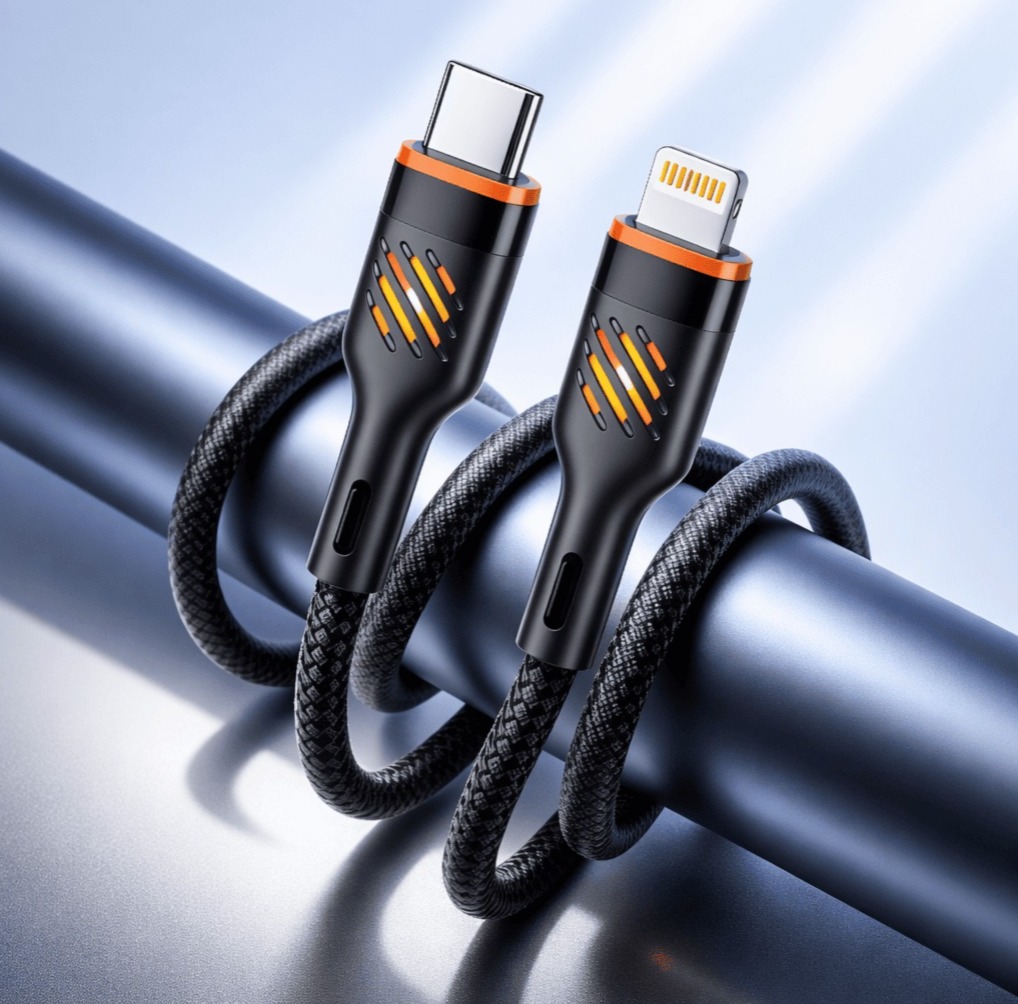
- USB-C to Lightning
- Other compatible cable combinations
Always use a quality cable with clearly stated specifications.
10. Check Device Compatibility
Before buying a car charger, check which devices you plan to charge.
A versatile charger may be used with compatible:
- Android smartphones
- iPhones
- Tablets
- Wireless earbuds
- Bluetooth speakers
- Power banks
- Smart accessories
- USB-C laptops
However, compatibility does not mean every device will charge at the charger’s maximum advertised wattage.
Actual charging power depends on the device, port, cable, charging protocol, and charger.
11. Look for Safety Features
Safety should be an important consideration when choosing any charging accessory.
A quality car charger may incorporate protection mechanisms designed to help manage conditions such as:
- Over-current
- Over-voltage
- Over-temperature
- Short circuits
The exact protection features vary by product.
Choose a charger from a reliable manufacturer or seller that clearly provides technical and safety specifications.
12. Check Build Quality
A car charger may be plugged in and removed repeatedly, exposed to vehicle vibration, and used under varying temperatures.
Therefore, build quality matters.
Look for:
- Strong outer housing
- Secure USB ports
- Proper connector fit
- Quality internal components
- Durable construction
- Good heat management
A well-designed charger should fit securely in the compatible vehicle socket without excessive movement.
13. Consider Charger Size
Compact car chargers are convenient because they take up less space around the dashboard or centre console.
However, size should not come at the expense of usability or thermal design.
If you frequently remove the charger, also check whether its design makes it easy to grip and unplug.
14. Consider Heat Management
Electronic chargers naturally generate some heat during operation, particularly at higher power levels.
Good charger design should manage heat appropriately under normal operating conditions.
Excessive or unusual heat may indicate a problem with the charger, cable, device, socket, or charging conditions.
Avoid using visibly damaged charging accessories.
15. Choose According to Your Usage
Different users have different charging requirements.
For Daily Commuters
A compact 20W–30W charger may be sufficient if you primarily charge one smartphone.
For Fast-Charging Smartphone Users
Consider a charger with USB-C PD, PPS, QC, or another charging protocol required by your phone.
For Two Devices
A dual-port 38W or 45W charger may provide a convenient balance of power and multi-device charging, depending on its port specifications.
For Higher-Power Devices
A 65W car charger can be useful for compatible tablets, power banks, smartphones, and some USB-C laptops.
For Families
A multi-port charger can provide greater convenience when several devices need power during a journey.
For Professional Drivers
Cab drivers, delivery professionals, and other users who rely heavily on smartphones may benefit from a reliable dual-port fast car charger.
38W vs 45W vs 65W Car Charger
Understanding the differences between common wattages can make choosing easier.
| Feature | 38W Car Charger | 45W Car Charger | 65W Car Charger |
|---|---|---|---|
| Everyday Phone Charging | Excellent | Excellent | Excellent |
| Fast-Charging Phones | Good | Very Good | Excellent* |
| Two-Device Charging | Model dependent | Model dependent | Model dependent |
| Tablets | Some models | Good | Very Good |
| Power Banks | Good | Good | Very Good |
| Compatible USB-C Laptops | Limited | Model dependent | Some models |
| Best For | Everyday users | Fast-charging users | Higher-power users |
*Actual charging speed depends on the device, cable, charging protocol, and individual port output.
Do not choose solely based on the total wattage. Compare the output of each port and the charging technologies supported.
Is a 65W Car Charger Better Than a 45W Car Charger?
Not necessarily.
A 65W car charger provides greater maximum power capacity, but that does not mean every user needs it.
If your phone only requires a lower charging power, a compatible 45W charger may already provide everything you need.
A 65W charger becomes more useful when:
- Your device supports higher charging power
- You charge tablets or power banks
- You use compatible USB-C laptops
- You need greater power flexibility
Choose based on your actual devices rather than simply selecting the highest number.
Common Mistakes When Buying a Car Charger
Avoid these common mistakes:
- Buying based only on wattage
- Ignoring individual port output
- Choosing the wrong USB port
- Ignoring charging protocol compatibility
- Using a poor-quality charging cable
- Assuming every USB-C port supports the same charging speed
- Assuming a 65W charger delivers 65W to every connected device
- Ignoring build quality
- Buying extremely cheap chargers with unclear specifications
- Ignoring device compatibility
Understanding these factors can help you choose a more suitable charger.
How to Know If Your Phone Is Fast Charging in the Car
Many smartphones display a charging status when connected to a compatible fast charger.
Depending on your device, you may see terms such as:
- Fast Charging
- Rapid Charging
- Super Fast Charging
- Manufacturer-specific charging indicators
If fast charging does not activate, check:
- Car charger output
- Charging cable
- Smartphone charging specifications
- USB port being used
- Charging protocol compatibility
- Vehicle power socket condition
The issue may not necessarily be with the charger itself.
Features to Look for in a Good Car Charger
Before purchasing, use this checklist:
- Appropriate wattage
- USB-C support if required
- USB-A support if required
- PD compatibility
- PPS support where needed
- QC compatibility where needed
- Dual ports if required
- Clearly specified individual port outputs
- Quality construction
- Secure socket fit
- Appropriate safety protections
- Good heat management
- Wide device compatibility
The best charger is not necessarily the one with the most features. It is the one that matches your devices and usage requirements.
Frequently Asked Questions
Which car charger is best for a phone?
The best car charger depends on your smartphone’s charging requirements. Choose a charger with the correct port, sufficient wattage, compatible charging protocol, quality construction, and appropriate safety features.
Is a 45W car charger good for smartphones?
Yes, a 45W car charger can be suitable for many smartphones. Actual charging speed depends on the phone, charger protocol, cable, and individual port output.
Can I use a 65W car charger with my phone?
Generally, a properly designed compatible 65W charger can charge lower-power smartphones because compatible charging systems negotiate the power required. Your phone does not automatically receive the full 65W.
Does a higher-watt car charger charge faster?
Only if your device, cable, and charging protocol support the additional power. A higher maximum charger rating alone does not guarantee faster charging.
Can a car charger charge two phones at once?
Yes, a dual-port or multi-port car charger can charge multiple compatible devices simultaneously. Check how the charger distributes power when multiple ports are being used.
Is USB-C better for car charging?
USB-C supports modern charging technologies such as USB Power Delivery and can provide higher power in compatible setups. However, the best port depends on your devices and cables.
Can a car charger charge a laptop?
Some higher-power USB-C car chargers may charge compatible USB-C laptops. Check the laptop’s charging requirements and the maximum output of the charger’s USB-C port.
Why is my phone charging slowly in the car?
Slow charging can result from a low-power charger, unsuitable cable, incompatible charging protocol, wrong USB port, high device usage, temperature conditions, or limitations of the smartphone itself.
Final Thoughts
Choosing the right car charger becomes much easier when you understand what the specifications actually mean.
Start by checking your smartphone’s maximum charging power and supported charging technology. Then compare the charger’s USB ports, individual port outputs, total wattage, PD/PPS/QC compatibility, build quality, and safety features.
For basic smartphone charging, a lower-wattage charger may be sufficient. For users who need faster charging or want to power multiple devices, a 38W or 45W dual-port charger can offer additional flexibility. A 65W USB-C car charger may be more appropriate for higher-power devices such as compatible tablets, power banks, and certain laptops.
Most importantly, remember that charging performance depends on the complete setup:
Car Charger + Cable + Device + Charging Protocol
Rather than buying the charger with the biggest wattage number, choose a reliable model that properly matches your smartphone and other devices.
The right car charger can provide convenient, efficient, and dependable charging whether you are commuting to work, navigating through the city, travelling on a long road trip, or simply keeping your devices powered throughout the day.